Riverside Student Wellness Plan 2026-27
Our mission:
Riverside Elementary is an active community that values and empowers all. In a supportive, safe environment, students grow to become respectful, resilient, independent, critically-thinking people who better the world.
Riverside Elementary School is committed to providing a safe and engaging learning environment for all students. This commitment includes ensuring that the academic, social, emotional, and behavioral needs of students are supported.
Student Wellness & Prevention Plan
Prevention Overview:
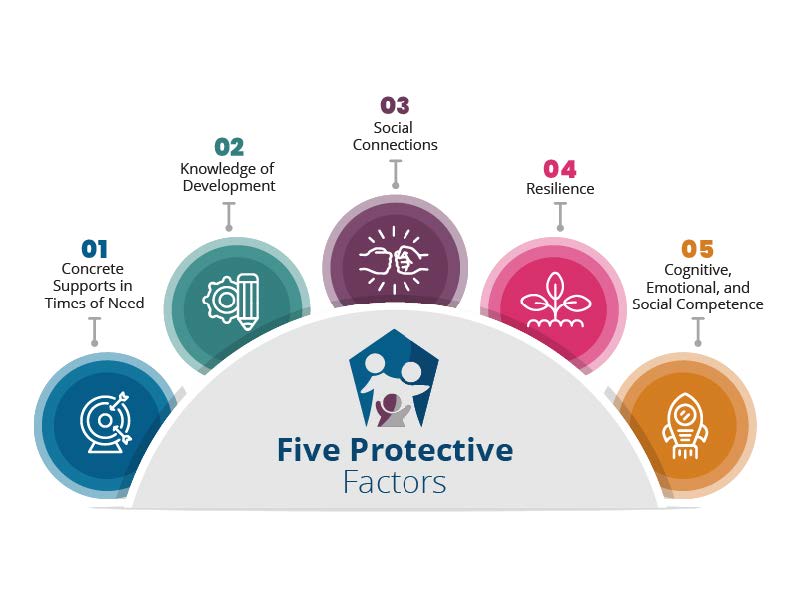 Research shows that addressing behavior and wellness concerns before they occur is much more effective than trying to stop them after they start. These proactive efforts are our primary prevention strategies. These strategies focus on the root causes, like enhancing protective factors and decreasing risk factors, strengthening well-being and helping students build resilience to thrive. They act as buffers against risk and promote resilience, healthy development, and positive outcomes. Risk factors are conditions that increase the likelihood of academic, behavioral, or mental health difficulties. Our school supports student development of Utah State Board of Education’s five protective factors represented by the graphic on the right. The five protective factors are:
- Concrete Supports in Times of Need
- Knowledge of Development
- Social Connections
- Resilience
- Cognitive, Emotional and Social Competence
Our school supports student wellness by prioritizing primary prevention practices that are centered on building protective factors and promoting positive, intentional social, emotional, academic, and behavioral development for all students. This prevention plan includes universal strategies (for all students) as well as targeted strategies (for small groups or a few students) for each section below.
Student Engagement & Attendance:
Our school believes that attendance directly impacts academic achievement, social development, and future success. Attendance also reflects a student’s sense of belonging. Some of the efforts our school prioritizes to encourage student engagement and promote attendance are listed below:
- Our school uses Panorama early warning system to identify students who may be at risk of disengagement or absenteeism, which allows us to proactively support students in feeling connected and engaged at school.
- Our school staff cares about our students and is committed to getting to know them to help them feel a sense of belonging.
- Our school creates frequent opportunities for students to connect with each other, build friendships, and feel a sense of belonging with their peers during class, at recess and lunch, and throughout their day.
- Our school staff monitors attendance using the District dashboard and notifies parents of absences.
- Our school does attendance drawings and provides rewards weekly to encourage attendance.
Social, Emotional, and Behavioral Well-Being:
Our school prioritizes prevention by offering support and services to our students and their families. Some of our everyday efforts, including the systems and strategies for supporting our students, are listed below:
- To support all students, we encourage them to follow three simple guidelines: Be Safe, Be Responsible, Be Respectful. Our school staff supports student skill development by clarifying behavioral expectations in all spaces throughout our school, proactively teaching these behaviors, addressing root causes of behavioral concerns, supporting student wellness, and consistently modeling and reinforcing appropriate behavior.
- Our school uses the In-Focus curriculum to teach social-emotional skills.
- Our school has a PBIS team (Positive Behavior Interventions and Supports) composed of the School Psychologist, School Counselor, Wellness Room Coordinator, Upper and Primary Grade Teacher, and an Administrator. ○ This team meets monthly to evaluate the effectiveness of the current PBIS efforts and makes recommendations for improvement using data.
- The team plans and implement “mini-skills” trainings for teachers to support classroom management (i.e. Zones of Regulation, Effective Use of Behavior Contracts, etc.).
- School-Wide PBIS includes: Behavior expectation posters throughout the school, a behavior matrix, teacher training, review of referral data, annual behavior expectations review with all students at the beginning of and throughout the school year, PBIS assemblies rewarding positive behavior, and student council videos modeling appropriate behavior.
- Our school uses a Response to Intervention (RTI) team meeting to discuss specific students’ needs. This includes a data review of academic, social-emotional, and behavioral needs. Team members include: School Administrators, Classroom Teachers, and additional support staff as needed. ○ Specific interventions are developed, recorded, and monitored over a period of time to assess effectiveness of planned interventions.
- School-based Counseling support offered to students needing additional support.
- Wellness room provided for students.
- The Wellness Room is a Tier 1 tool designed for students to identify dysregulated emotions and practice regulation skills.
- Zones of Regulation student and staff training conducted each school year. ○ Supports students to identify their emotions, understand which Zone they are in, and use tools to self regulate.
- Our school provides access to District mental health and support resources through Student Services which includes the Jordan Family Education Center and Mental Health Access Program.
- Our school’s mental health providers (school counselors, school psychologists, or clinical support) are trained and supported by District administration to follow current best practices in prevention and intervention efforts.
- Our school intervenes with early warning, content monitoring, and anonymous reporting tools with support from District specialists to identify and support students who may be at risk.
- Our school provides access to parent and family resources including a District partnership with the Cook Center for Human Connection, evening parent seminars, and classes through the Jordan Family Education Center.
- Our school uses Panorama data management to identify students in need of additional support and proactively meet their needs.
- Our school provides access to academic support with District departments to support the success of every student.
- Our school engages in community building activities to promote connectedness among students, staff, parents and the community. These activities include: Back to School Night, Math/Literacy Night, Books and Breakfast, Grandparents Day, Buddy Lunch, PTA Community Nights, Field Day, and Parent Teacher Conferences.
Suicide Prevention
- Our school’s mental health providers and administrators are trained on and review District suicide risk intervention guidelines annually with support from Jordan District’s Student Services Team.
- Our school uses Zones of Regulation and trauma informed practices for staff and students to help them understand and manage their emotions and identify appropriate solutions to any given situation.
- Our school has a Wellness Room and supports students by teaching them specific regulation skills to support them and referring them to the school counselor if needed.
- Our school teaches positive social skills and coping strategies on a weekly basis using the In-Focus curriculum.
- Our school uses Check-In / Check-Out as a Tier II prevention tool to support the ongoing emotional needs of students.
- All of our school’s licensed staff participate in suicide prevention training for their license renewal.
- Students identified who may be at risk of suicide receive interventions and support appropriate to their individual needs which may include a screening interview CSSR-S, parent/guardian contact, a safety plan, mental health recommendations/referrals (JFEC, MHAP, etc.), a re-entry meeting, and regular follow-up.
- Our school participates in the SafeUT program, which alerts school Administrators and School Counselor of any concerns submitted through the SafeUT app.
- Student support is available by the school counselor, psychologist and Wellness Room teacher for identified students needing additional emotional support during the school day.
- All of our District’s staff participate in an annual crucial concerns training to maintain employment in the District, which covers topics such as suicide, bullying, and violence prevention.
- Students identified who may be at risk of suicide receive interventions and support in partnership with their parents and guardians, appropriate to their individual needs. This may include a screening interview, parent/guardian collaboration, a safety plan, mental health recommendations/referrals (Jordan Family Education Center, Mental Health Access Program, etc.), a re-entry meeting, and regular follow-up.
- Our school prioritizes early intervention and utilizes several District supported tools to support student wellness when needed. These tools include content monitoring on student’s school accounts to respond to concerning content, SafeUT anonymous reporting for students to express concerns, and early warning data system through Panorama.
Bullying Prevention
- Our In Focus curriculum, School Counselor classroom lessons and PBIS initiatives are implemented to prevent bullying behavior.
- Our school team proactively reviews relevant data on school climate, safety, and bullying by identifying vulnerable populations and specific spaces where bullying may be likely to plan support accordingly.
- Our school’s staff is trained on school procedures for recognizing, reporting (SafeUT, content monitoring, etc.), and responding to bullying incidents at the beginning of the school year and throughout the year as needed.
- All of our District’s staff participate in an annual crucial concerns training to maintain employment in the District which covers topics such as suicide, bullying, and violence prevention.
- Students involved in incidents of bullying as targets, aggressors, or witnesses receive support for their individual needs which may include suicide risk assessments, counseling and mental health services, Functional Behavior Assessment (FBA), Behavior Intervention Plan (BIP), a student wellness plan and/or parent/guardian contact—recognizing that targets, aggressors, and witnesses of bullying are more susceptible to school issues.
- Our school’s administrators have been trained on Bullying Action Planning through the District Wellness Team and continue to implement best practices in bullying intervention, with the overall goal of prevention.
- Our school prioritizes early intervention and utilizes several District supported tools to support student wellness when needed such as content monitoring on student’s school accounts to respond to concerning content, SafeUT anonymous reporting for students to express concerns, and early warning data system through Panorama.
- Wellness room provided for students.
- The Wellness Room is a Tier 1 tool designed for students to identify dysregulated emotions and practice regulation skills.
- Zones of Regulation student and staff training conducted each school year.
- Supports students to identify their emotions, understand which Zone they are in, and use tools to self regulate.
Violence Prevention Plan
- Our school’s administrators, School Counselor and School Psychologist are trained on the Comprehensive School Threat Assessment Guidelines (C-STAG).
- Our school has a process for timely response to school threats using Comprehensive School Threat Assessment Guidelines (C-STAG) and its decision tree. This includes warning potential victims and their parents/guardians.
- Our school’s staff and students are aware of school procedures for recognizing and reporting (SafeUT, content monitoring etc.) threats of violence.
- Students who are affected by or who make threats of violence receive interventions that proactively support students by building skills, meeting needs, and problem solving that aligns with the school’s universal strategies. Students receive support appropriate to their individual needs which may include problem-solving, interviews, suicide risk assessments, Functional Behavior Assessment (FBA), Restorative Conferencing, Mediation, a Behavior Intervention Plan (BIP), counseling and mental health services, a student wellness plan and/or parent/guardian contact.
- Our school prioritizes early intervention and utilizes several District supported tools to support student wellness when needed: content monitoring on student’s school accounts to respond to concerning content, SafeUT anonymous reporting for students to express concerns, and early warning data system through Panorama.
- All of our District’s staff participate in an annual crucial concerns training to maintain employment in the District which covers topics such as suicide, bullying, and violence prevention.
- Our In Focus curriculum teaches social-emotional skills, which includes, but is not limited to, coping strategies, bullying prevention, resilience, and appropriate school behaviors.
Please contact school administration for questions regarding our plan.